Hello everyone, this is Alex. Today, I bring you a buying guide and recommendation for eartip pairings with the Que IEMs. In an in-ear monitoring system, eartips are a crucial component, significantly influencing the sound performance and signature. As the key accessory connecting the earphone nozzle to the ear canal, they have a notable impact on the physical propagation of sound, ultimately affecting aspects like soundstage, technical performance, and imaging. Additionally, eartips directly relate to wearing comfort. After some experimentation, I found the Que responds very noticeably to eartip changes. Coupled with frequent inquiries from friends about eartip recommendations, I decided to conduct a large-scale eartip comparison.
All my listening impressions will be based on the Que’s stock silicone eartips, describing the changes brought by other eartips relative to them, and are specific to the Que earphones only. However, you can also use this as a reference for the general characteristics of different eartips, keeping in mind their performance may differ significantly on other earphones.
First, a quick primer on the general sound tendencies of eartips based on their physical attributes:
Nozzle Diameter: Narrow → Wide; Stronger bass quantity/definition → Enhanced treble extension/brightness, increased sibilance
Nozzle Length: Short → Long; Sound becomes more intimate/in-your-head → Better soundstage depth/layering, treble may become crisper
Material Hardness: Soft → Hard; Sound is softer, more natural → Increased resolution/treble brightness, may introduce coloration
Insertion Depth: Shallow → Deep; Sound becomes more relaxed → Improved mid-treble clarity/energy, more orderly soundstage
Finally, and most crucially: Seal
Regardless of an eartip’s physical attributes, achieving a good, stable seal with the ear canal is the foundation for all sonic performance. A poor seal leads to bass leakage, resulting in a thin, weak sound, and makes all other tonal tendencies irrelevant. Therefore, when choosing eartips, ensuring they provide a stable and comfortable seal for you is the first priority before considering sound signature. My testing also used sizes that ensured a proper seal, so please pay attention to this when choosing your own.
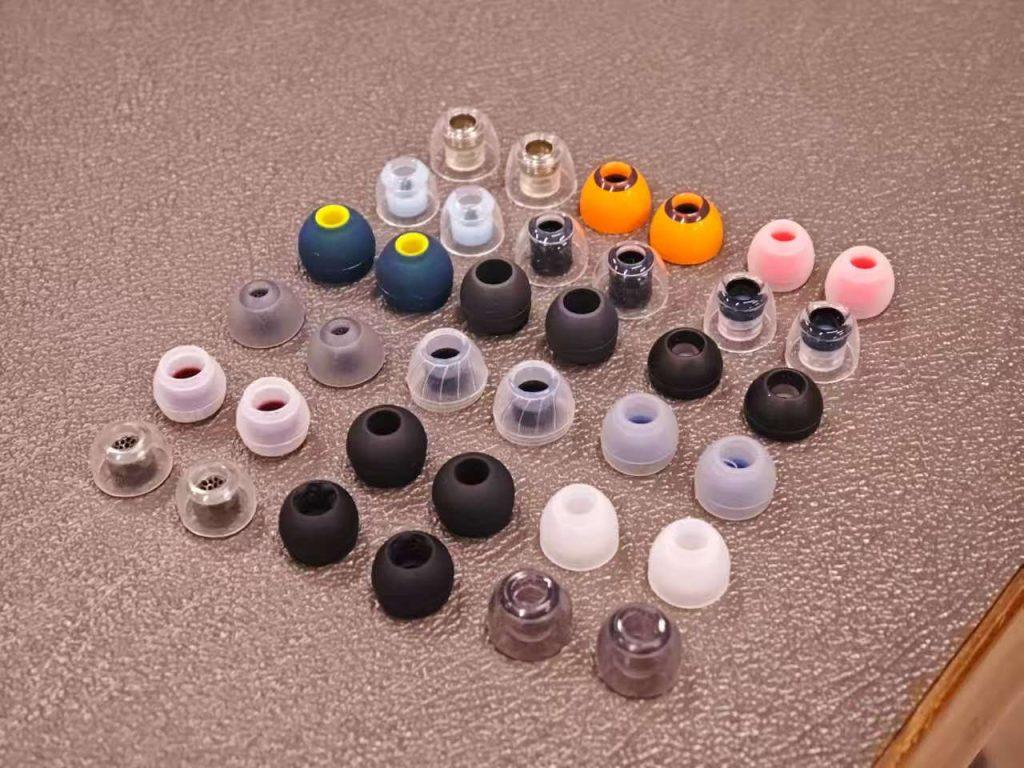
Original ear tips:
Sound: Slightly wider vocal projection, moderate soundstage, good separation, natural harmonics.
Fit: Relatively stiff, medium length. With the correct size, they provide a secure fit but may not be ideal for extended use.
Nostalgia XWB:
Sound: Provides a balanced and natural enhancement of overall energy and cohesion, leaning towards a livelier and brighter sound signature. Vocal projection becomes more focused, and breath details are more pronounced. An excellent all-round upgrade.
Fit: Soft material, slender and elongated shape with a tapered end. Allows for deeper insertion into the ear canal, providing secure, comfortable wear and good isolation.
AZLA SednaEarfit Xelastec:
Sound: Significantly improves instrument clarity and definition, adding more line and edge to sounds. Mid-high frequency instruments become more brilliant and clear. However, vocal projection widens noticeably, which can sound less natural. These tips are likely best for instrumental music enthusiasts.
Fit: Made from liquid silicone, they are firm and elastic with high surface friction. Insertion can feel resistant, but they offer excellent seal, wide flanges, and strong support.
Final Short Type E:
Sound: Noticeably blurred edges of sonic images, reduced resolution and energy. Overall sound is listenable, smooth, relaxed, and natural. However, they don’t adapt well to different music genres.
Fit: Extremely short length, easy to achieve a seal, with more contact against the ear cavity. Suitable for long-term wear with excellent isolation. Soft, unobtrusive flanges offer a fantastic overall wearing experience.
Final Type E:
Sound: Adds a noticeable background “smearing” effect and some reverberation. However, they offer a unique presentation of mid-high frequency ambiance and separation, which can be excellent for certain tracks. Soundstage feels more intimate, with a slight increase in bass quantity.
Fit: Tapered design allows for deep insertion into the ear canal, providing very secure wear and excellent isolation.
Pentaconn Coreir AL Alloy:
Sound: Noticeably improved horizontal soundstage, brighter highs, and a slight increase in resolution. Metal-nozzle tips are a popular category recently. Their core principle involves reflecting sound more directly through the metal nozzle to enhance coloration and soundstage perception, somewhat similar to interchangeable nozzles on some headphones.
Fit: Can be described as disastrous. The nozzle is too long, difficult to position correctly, and can cause discomfort/pressure in the ears.
Acoustune AET08:
Sound: Bass impact! Greatly increases bass quantity and cohesion. Mid-high frequencies (vocals and instruments) are pushed farther back, becoming thinner and reduced in presence. A specialized tool for BASSHEADS.
Fit: Long nozzle, soft flanges. Provides a very secure, stable fit with excellent seal.
Acoustune AET07:
Sound: Almost identical to the original tips.
Fit: Also identical in wear.
Kbear TRI Clarion:
Sound: Ultra-wide bore design. Weakens bass cohesion and quantity, enhances midrange vocal/instrument resolution and presence, and improves soundstage presentation. However, dynamics and energy are noticeably reduced. Overall, somewhat of a trade-off.
Fit: Can achieve a secure and relatively deep fit. Wearing experience is above average.
JVC Spiral Dot++ (FX10):
Sound: Reduces high-frequency quantity, making it smoother without significant loss of detail or heavy smearing. Still maintains good separation, excellent soundstage, and crisp, decisive dynamics/impact. No noticeable step back in resolution. A great choice for a more listenable, non-fatiguing orientation.
Fit: Thick, soft, and relatively large in diameter. Overall short length. Highly praised for comfort.
JVC Spiral Dot+ (FX12):
Sound: The edges and contours of vocals almost disappear, creating a comfortable, diffuse, and ambient presentation. Instrument shapes remain intact. Overall sonic images feel closer, and high-frequency sibilance is reduced.
Fit: Short, thick, soft design. Easily secures and seals the ear canal. Highly praised for comfort.
Divinus Velvet:
Sound: Noticeably reduces high-frequency quantity. Mid and low frequencies sound solid, full, and thick.
Fit: Material is relatively stiff, thicker at the top and tapered at the bottom. Wearing experience is similar to original tips, possibly with a better seal.
YSLEZL SY60:
Sound: Transparent, spacious, clean. Soundstage improves in both width and depth. Resolution increases slightly. High-frequency presence is noticeably increased, yet bass cohesion and energy are largely preserved. Sonic images are clear, with slightly enhanced definition/line.
Fit: Extremely soft with high friction, providing a secure fit. Material is relatively thin, so isolation is average. (Considering the low price, offers high value.)
AZLA SednaEarfit Light (Short):
Sound: Soundstage becomes smaller, sound feels more intimate/in-your-head, enhancing envelopment and ambiance. Overall slightly warm with a small increase in bass.
Fit: Wearing experience is basically the same as the original tips.
AZLA SednaEarfit (Standard):
Sound: A typical long-nozzle tip. Enhances bass cohesion, detail, and quantity—impactful and punchy. Highs can become slightly aggressive/exciting, resolution dips a bit, and mids can be somewhat masked.
Fit: Long and stiff nozzle. Can allow for deep insertion but may also push the IEM body away from the ear. Potentially a very poor fit for some.
AZLA Xelastec 2:
Sound: A filtered tip. Significantly slows down the speed of mid-high frequencies. Arguably more suitable for high-resolution IEMs with electrostatic drivers to balance speed, but on the Que, it loses resolution and image clarity. Not highly recommended.
Fit: Basically the same as the original tips.
AZLA Crystal 2:
Sound: Another filtered tip, but with larger filter pores, having less impact on speed. Balanced and mild across frequencies. Soundstage is slightly narrower than original tips. Vocals are more focused. Suitable for users concerned about IEM hygiene, effectively blocking dust and earwax.
Fit: Overall short, with large, thick flanges offering excellent seal and stability. Seems suitable for commuting.
AZLA Mithryl:
Sound: AZLA’s stainless steel nozzle tip. Thick, sturdy shape with a long nozzle and thick silicone. Significantly increases bass quantity. Enhances speed and brightness in mid-highs. Overall sound thickness increases noticeably.
Fit: Due to the smaller metal part and thick silicone covering, fit is better than other metal nozzle tips but can still cause some ear canal pressure.
AZLA MAX TWS 6:
Sound: Reduces high-frequency quantity and speed slightly, making the overall sound a bit darker. Mid-low frequency energy is well preserved. Vocals are restrained and focused. Soundstage is slightly reduced.
Fit: Short, small, and soft. As a TWS-specific tip, comfort and isolation meet expectations.
Pentaconn Coreir Brass:
Sound: Significantly enhances the lushness and extension of mid-high frequencies. Adds texture/grain to vocals, making breath and detail more apparent. Technical performance also improves somewhat. A stunning upgrade option.
Fit: Same as the aluminum nozzle version—almost disastrous.
Softears UT Titanium:
Sound: Slightly reduces bass cohesion, expands soundstage a bit. Provides a balanced enhancement in mid-high transparency and technical performance.
Fit: Includes a section of titanium metal nozzle, which can cause discomfort. Cannot score highly on fit. (And it’s so expensive!)
Spinfit CP100:
Sound: Slightly widens soundstage, alters imaging positioning, slightly improves separation. Resolution decreases a bit. Tonally more restrained, slightly warmer, reducing listening fatigue.
Fit: You can always trust CP series tips for fit. Slim, soft, with their unique rotating design, they conform almost perfectly to the ear canal. Can be rated at the same level as Final Short E.
DUNU S&S (White Bucket):
Sound: Widens horizontal soundstage with precise instrument positioning. However, highs become less defined/”mushy,” and resolution decreases slightly.
Fit: Although they look intimidating, the material is quite soft, allowing for a deep, custom-like fit with excellent seal and isolation.
NF Audio MS42:
Sound: Reduces soundstage size, emphasizes the three-dimensionality and separation of musical elements, significantly enhancing positional accuracy. Frequency distribution is very balanced. Soundstage is more circular, offering great envelopment.
Fit: As a short tip, relatively soft, achieving excellent conformity and seal.
Maestraudio iFep01:
Sound: As foam tips, they mainly suppress high-frequency harshness, making the soundstage very expansive and the overall sound very smooth. However, midrange resolution takes a step back. Suitable for softer, slower music genres, offering a distinct character.
Fit: Long nozzle. Foam can create some pressure in the ear canal, but fit is very secure and isolation is excellent.
Tanchjim C43:
Sound: Noticeably increases sound thickness but weakens dynamics. Overall sound speed becomes slower. However, there is no loss of resolution.
Fit: Very soft and moldable, good isolation, highly praised for comfort.
Radius Clear Zone:
Sound: Stronger sense of sound envelopment, increased depth. Horizontal stage noticeably tightens and becomes more circular. Sonic images become brighter and sharper without sounding aggressive or harsh. Bass becomes more cohesive and punchy.
Fit: For a highly transparent material, relatively stiff, but conforms well, feeling like it sticks to the skin. Seal is average to good.
LIZER LAB Jijujet-3 Stainless Steel (Fliptips):
Sound: Lest writing the full name makes it unrecognizable—these are the famous reverse-fit tips. Their main characteristic is completely restructuring the soundstage layout, placing a clear emphasis on depth. The listening experience resembles some closed-back headphones, very immersive. Significantly increases speed. Timbre becomes rounder and sweeter. Overall sound is clean and smooth, with some improvement in resolution.
Fit: These require the same fitting technique as ER4 series: pull the ear up and insert firmly. Can cause significant ear canal pressure, but isolation and stability are top-tier.
Tang Sancai Noble Version:
Sound: Muddy, diffuse imaging, heavy background smearing.
Fit: The metal part is quite small, so fit is relatively acceptable.
Shanling SE100:
Sound: An ear tip with a metal structure. Sonically, it clearly and precisely increases midrange speed, making it very fast and sharp. However, on the Que, it can sound somewhat disjointed.
Fit: The metal part still causes some foreign object sensation but is better than typical metal nozzle tips. Isolation is average.
(This review will be updated intermittently with more ear tip models.)
Comments are closed